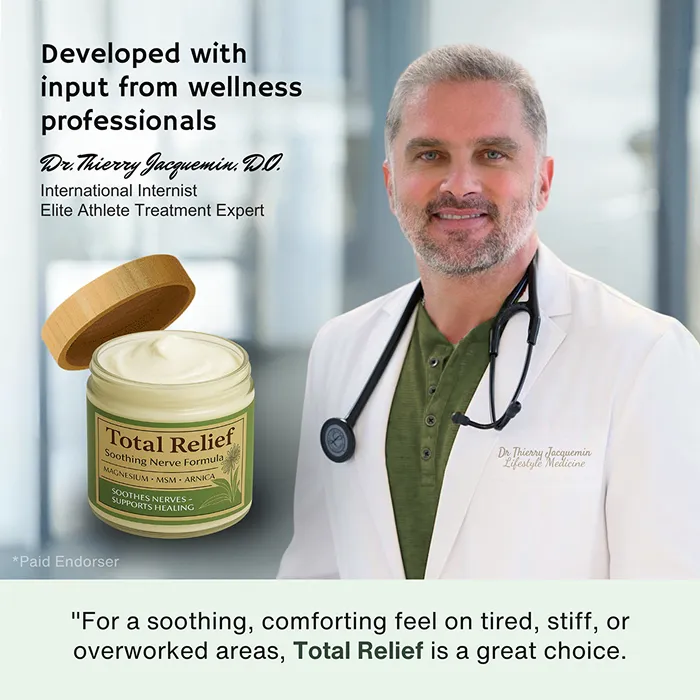
is a board-certified physician with over a decade of experience
helping patients live better and longer.

He completed his residency at Mount Sinai Medical Center and
went on to build a reputation as one of Miami's most
sought-after doctors, known for his philosophy that the human
body, given the right tools, is capable of far more than most
people expect.
But what got me wasn't any of that. It was something he
mentioned almost in passing - about a patient he'd seen
years ago in his Miami practice.
She'd come in for something routine. But as she was leaving,
she stopped at the door and turned around. Almost like she'd
been working up the courage to say it.
"Is there anything - anything at all - you can do about the
burning in my feet? I haven't slept properly in two years."
Dr. Jacquemin said that moment stuck with him.
Because he realized he didn't have a good answer.
And for a doctor who'd built his whole career around
optimizing how people feel… that wasn't something he could
just let go.
So he went back to the research.
And what he found completely changed how I understood what
was happening to my own body.
The Thing Nobody Had Bothered to Explain to Me

The burning and the tingling aren't signs that your nerves are
broken.
They're signs that your nerves are starving.
Here's the thing. The nerves in your feet need certain
nutrients to work right. When they stop getting those
nutrients, they don't just go quiet and give up, though.
They go haywire and start firing over and over,
sending pain signals to your brain on a loop.
That's what the burning and tingling is: our nerves
screaming for something they're not getting.
And here's the part that made me legitimately angry
when I heard it: even though this was happening,
your blood tests probably came back fine.
Mine did too.
Because those tests measure nutrients in your blood,
not in your actual nerve tissue.
There's even a study out of Edith Cowan University
that followed 441 people and found that your nerves
can be completely depleted even when your bloodwork
looks totally normal.
So your doctor sees the results, tells you everything
looks okay, and sends you home.
Meanwhile your nerves are still starving… but nobody
connects the dots.
And the Pills Were Never Going to Fix It

I want to be fair here. Gaba helped me sleep through a few
nights, early on. I'm not going to pretend it was useless.
But Dr. Jacquemin explained something I'd never thought
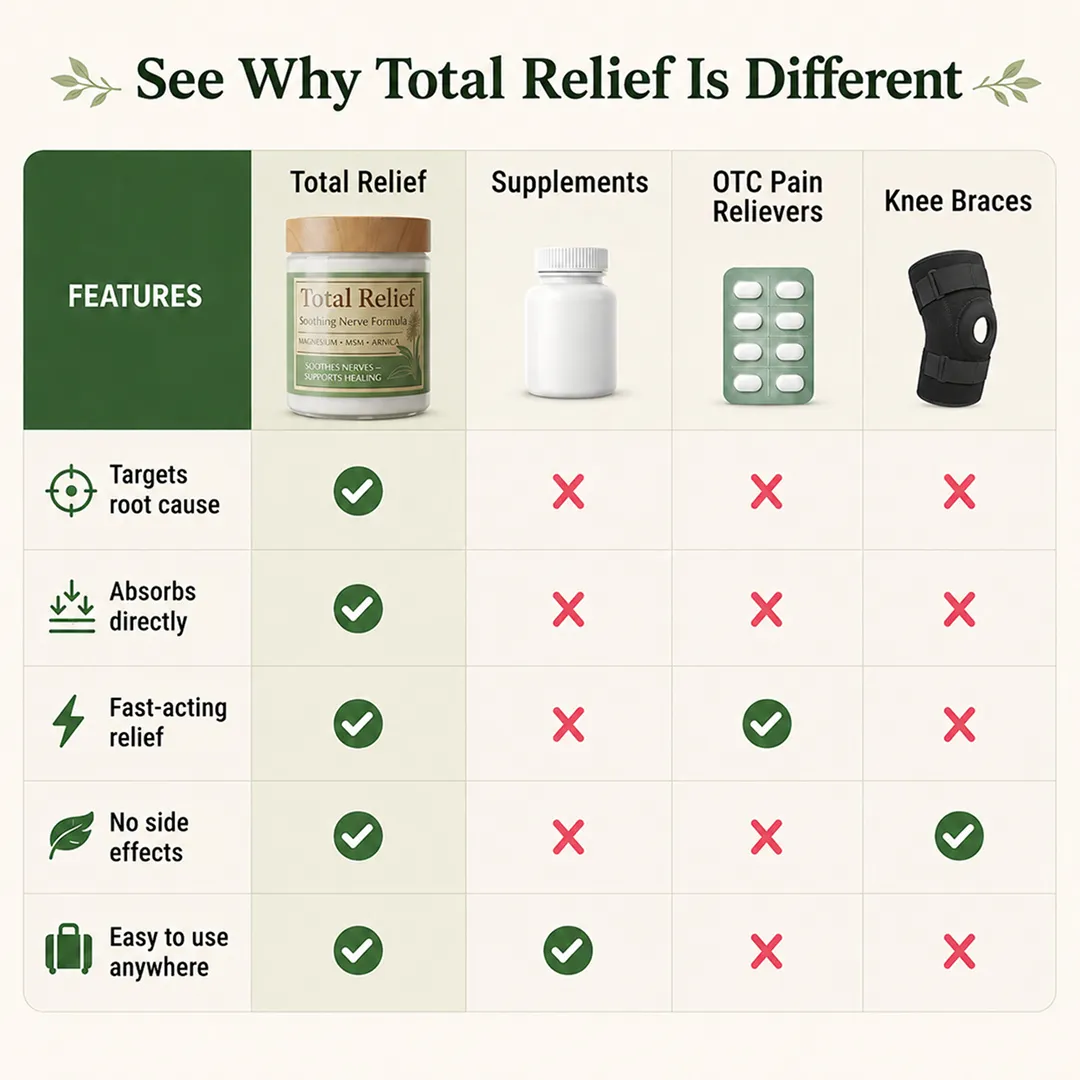
about. Those medications like Gaba and pregabalin block
pain signals - that's their whole job.
They don't do anything about why the signals are being
sent in the first place.
He used this analogy that I keep coming back to.
Say your car starts making a terrible noise because it's
low on oil. The engine is grinding and the warning light
is flashing
But rather than giving it the oil it needs, your
solution is to turn the radio up loud enough that you
can't hear it anymore.
That's what painkillers do for nerve pain. The noise goes
away for a while, but the engine is still grinding.
And the second the pill wears off, there it is again,
because nothing actually changed.
The nerves that were starving before you took the
pill are still starving.
And don’t get me started on the side effects - I felt
like a zombie for a good stretch of time.
Foggy, slow, tired in a way that sleep didn't even
scratch.
That's not nothing. That's months of your life.
Here's the Part That Actually Gave Me Hope
"Dead nerves don't hurt.”
I didn't know that before Dr. Jacquemin explained it.
When a nerve actually dies, it goes numb. The burning, the
tingling, the shooting pains - those are coming from nerves
that are still alive and still trying to communicate.
They're in distress, but they're there.
The Mayo Clinic has confirmed that peripheral nerves - AKA
the ones in your feet, your hands, and your legs - can
sometimes regenerate an inch a month, given the right
conditions.
The research also shows that the longer you wait, the
harder recovery gets.
After about six months without proper treatment, the odds of
full recovery start to drop off pretty sharply.
But if you're still feeling pain, as wrong as it sounds,
you’re actually in luck.
Because it means your nerves are still alive, and that’s
huge - there’s still time to turn this around.
So What Do Starving Nerves Actually Need?

Magnesium.
About half of all Americans don't get enough of it, and
it's not really their fault.
Every time your blood sugar spikes, your kidneys flush
magnesium out of your body.
And stress does the same thing.
So if you’re not replenishing that magnesium at a fast
enough rate, that’s where the issues begin… because your
nerves literally starve without it.
Now, I know what you're thinking, because I thought the
same thing.
I'd already tried magnesium. So when Dr. Jacquemin brought
it up I almost tuned out. But then he explained the part
nobody puts on the bottle.
Most magnesium supplements - the kind you'd grab at any
pharmacy - use a form your gut can barely absorb.
We're talking about 4% absorption on a good day.
And even that small amount has to get distributed
everywhere in your body before a single drop makes it to
the nerves in your feet and hands.
They're basically last in line behind every other
organ in your body.
So you could be taking magnesium every single day and
your nerves still aren't getting enough of it.
There are IV treatments that bypass all of that, but we're
talking $2,000 or more per session, trips to a clinic, not
exactly something you can work into a Tuesday.
What Dr. Jacquemin started looking into was something way
simpler.
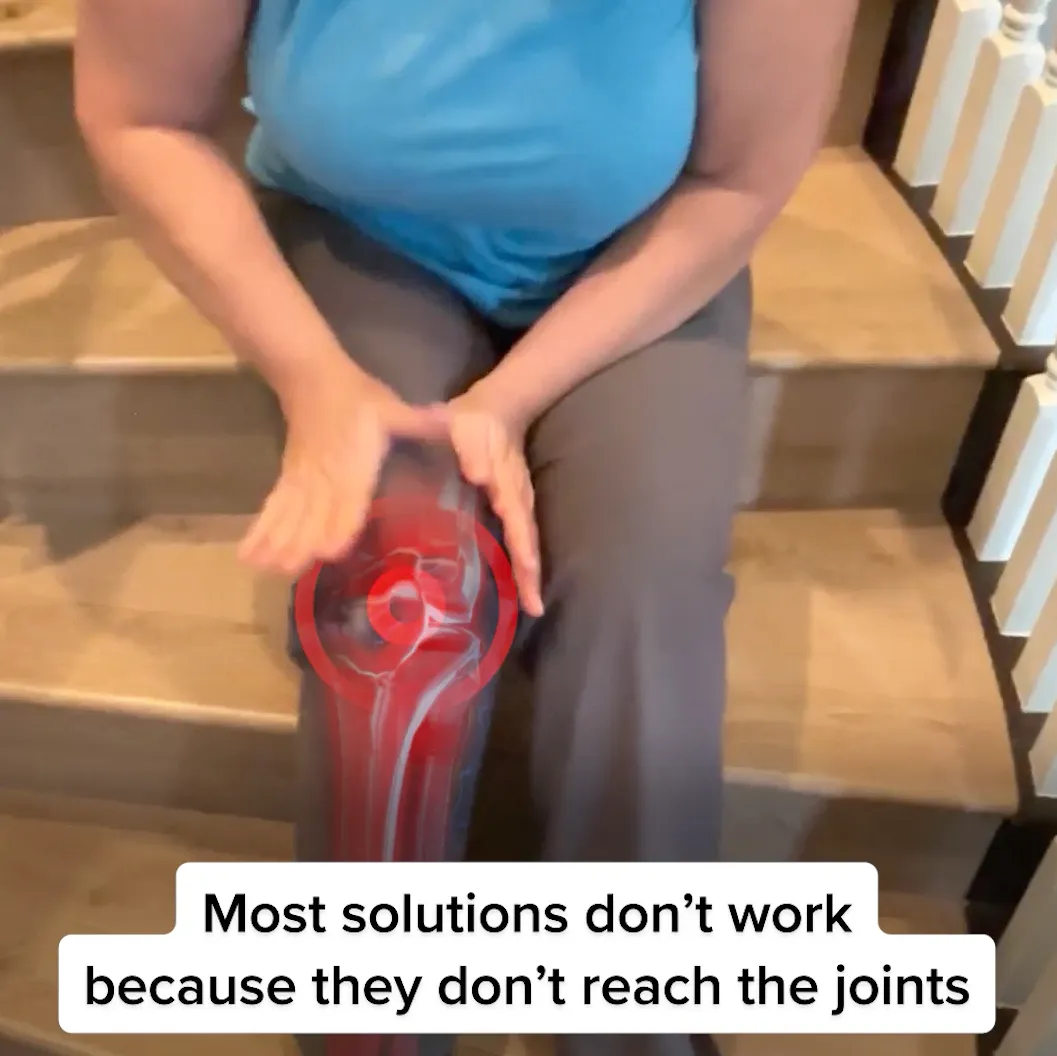
Getting magnesium through the skin straight to the
nerve endings that need it,
without the detour through the rest of the body.
But the Form Matters More Than You'd Think

Not all magnesium can do this.
Your skin has a pretty strict size limit on what it'll
let through.
Magnesium oxide, the most common form in supplements and
most store-bought creams, has
molecules too large to pass through skin.
It just sits on top and evaporates. Same with magnesium
sulfate.
But magnesium chloride is different because the
molecules are small enough to actually absorb through
the skin barrier.
Dr. Jacquemin described it like trying to push something
through a chain link fence: oxide is like a basketball,
chloride is like sand. One gets stuck, the other goes
right through.
Your feet, specifically, are a great delivery
point.
They're packed with nerve endings, and the blood vessels
around the arch pull nutrients straight into the nervous
system.
Apply the right kind of magnesium there and you're
basically feeding the nerves from the outside in, right at
the source.
There was even a clinical study done in 2023 where
patients used a magnesium chloride cream on their skin
for 12 weeks. Their nerve pain scores dropped from 6.92
to 4.26. And their blood magnesium levels barely
changed…
Meaning the magnesium wasn't just floating around in
their blood. It was going straight to the tissue.
That's what Dr. Jacquemin went looking for: a cream that
actually worked the way the research said it could.
Almost Everything He Found Was a Letdown
He looked at the options. Most magnesium creams he came across
either wouldn't show their full ingredients list, or used the
forms of magnesium that can't actually get through skin.
A lot of them had
concentrations so low - 1% to 5% - that even if the absorption were perfect, there still
wouldn't be enough there to do much.
And most used bases that would just evaporate off the skin
in minutes, taking whatever magnesium they had with them.
Finally,
he went to some contacts he trusted in the pharmaceutical
world.
One of
them pointed him to a small company called
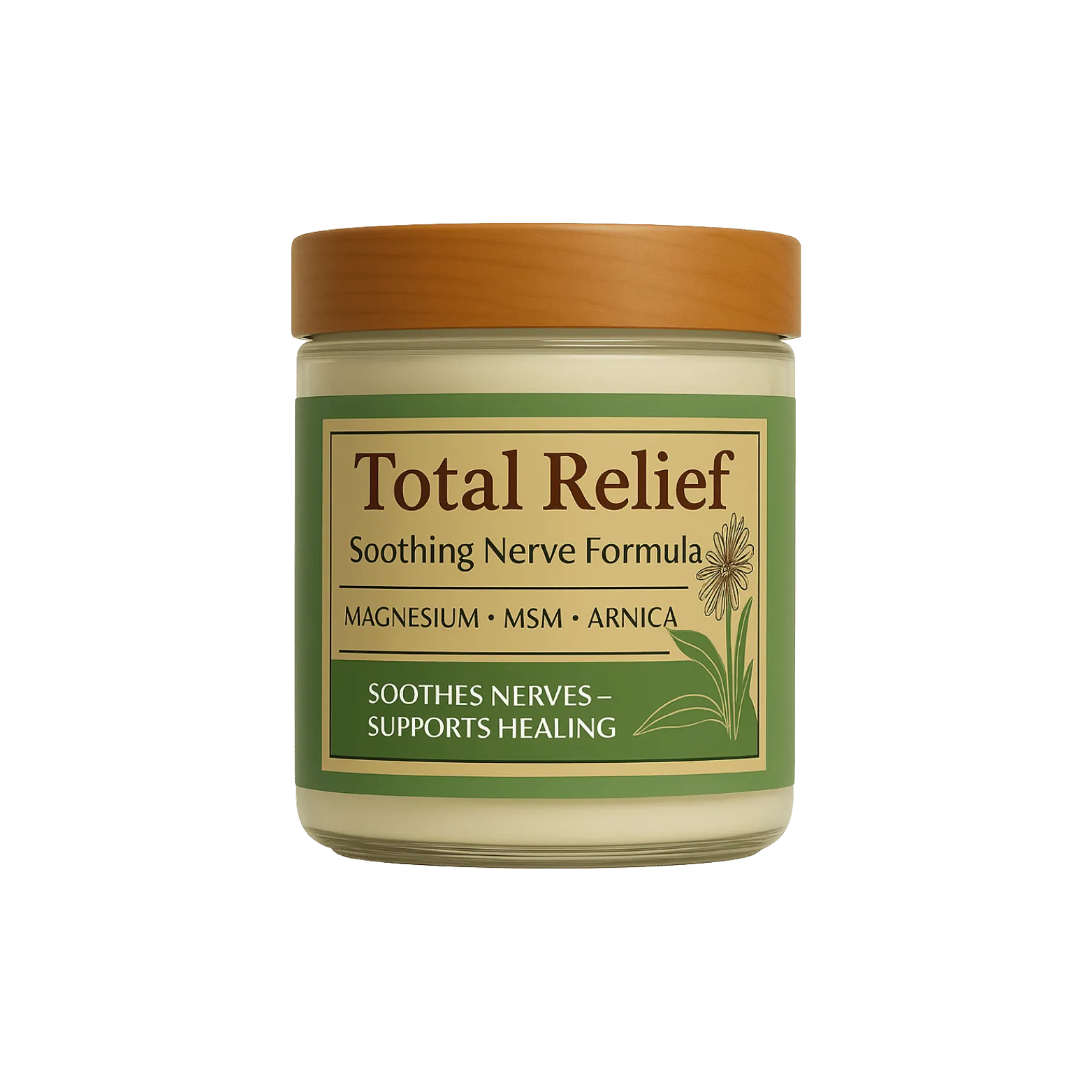
HiRelief, and a product called
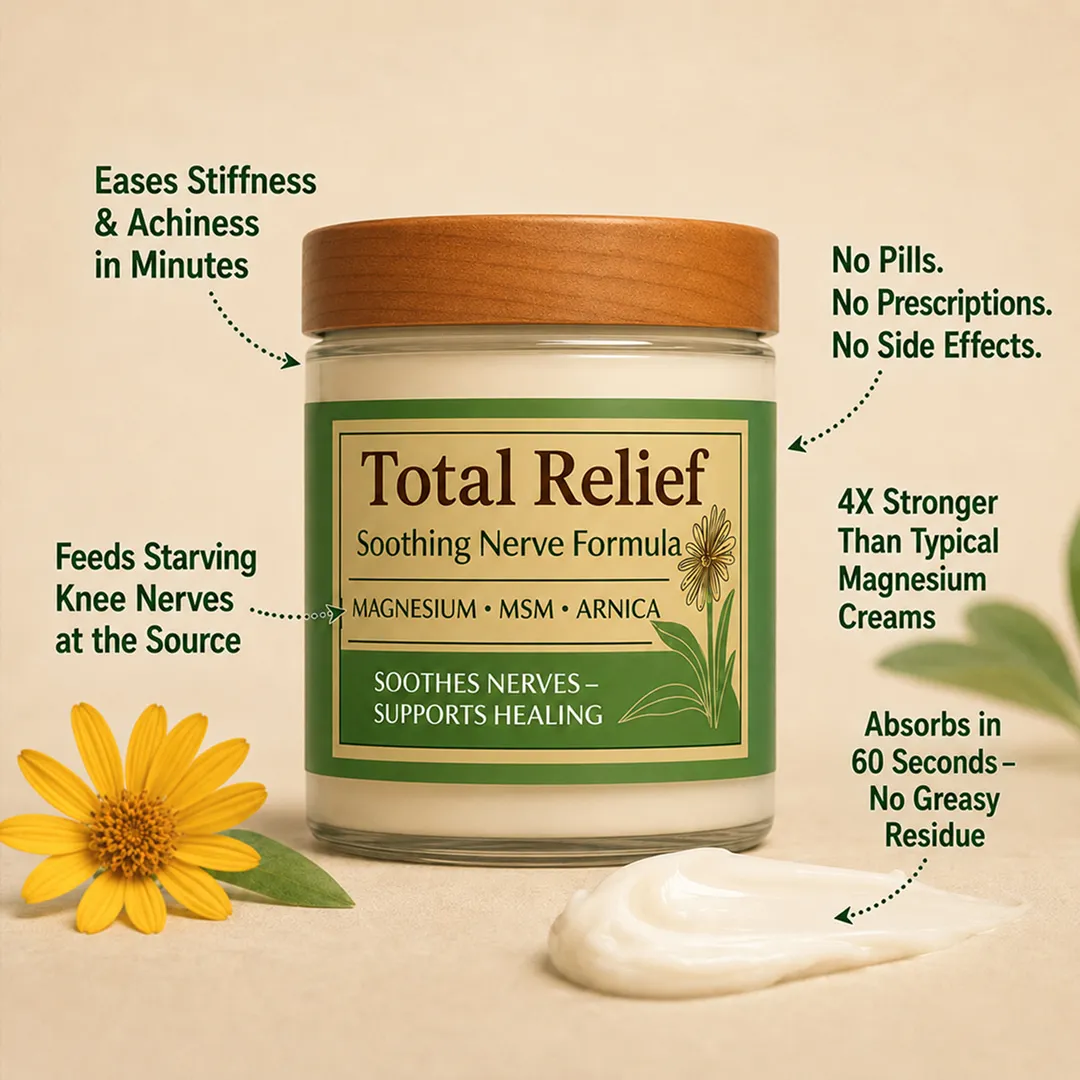
Total Relief Magnesium Cream.
He looked at the formula…
And this time, it was actually different.
Total Relief Was the First Thing That Checked Every
Box 
20% magnesium chloride: the right form, at four to twenty
times the concentration of anything else he'd been able to
find.
It was sourced from the Dead Sea, which has some of the
highest-purity magnesium in the world.
Instead of a base that evaporates,
Total Relief uses shea butter, coconut oil, and a couple
of other ingredients that hold the cream against your skin
for hours.
So the magnesium actually has time to absorb.
The formula also has menthol, MSM, and glycerin, which help carry the magnesium through the skin
faster.
And then there are ingredients like
arnica, which helps with
circulation
so the nerves actually get the nutrients they need, plus
Vitamin B6 for nerve support, and
MSM which helps with the
inflammation that makes everything worse.
Dr. Jacquemin got some samples and gave one to his
patient who’d complained about the burning in her
feet.
A few weeks went by… then she called again.
And she sounded like a whole different woman.
"It's the first thing that has ever actually worked for
me,"
she told him.
He started giving samples to other people he knew who had
nerve pain.
And within a few weeks, he had them calling to thank him.
He knew at that point he had to tell more people about
it.
Using It Is Incredibly Simple 
You put about a dime-sized amount on wherever the burning is
worst, whether that’s your feet, your ankles, your hands, or
your legs.
Then you rub it in for about sixty seconds, until it’s
absorbed, in the morning and before bed.
It soaks in without leaving a greasy feeling or a medicinal
smell. It also won’t mess with any medications you're
already taking since it goes straight through the skin and
not through your stomach.
It’s safe for drug testing too, which matters for people
still working.
A lot of people feel a difference within the first few
applications.
The bigger changes, like sleeping through the night, or
walking without planning every step, usually build up over
two to six weeks as the nerves start getting consistent
nourishment.
What People Are Actually Saying
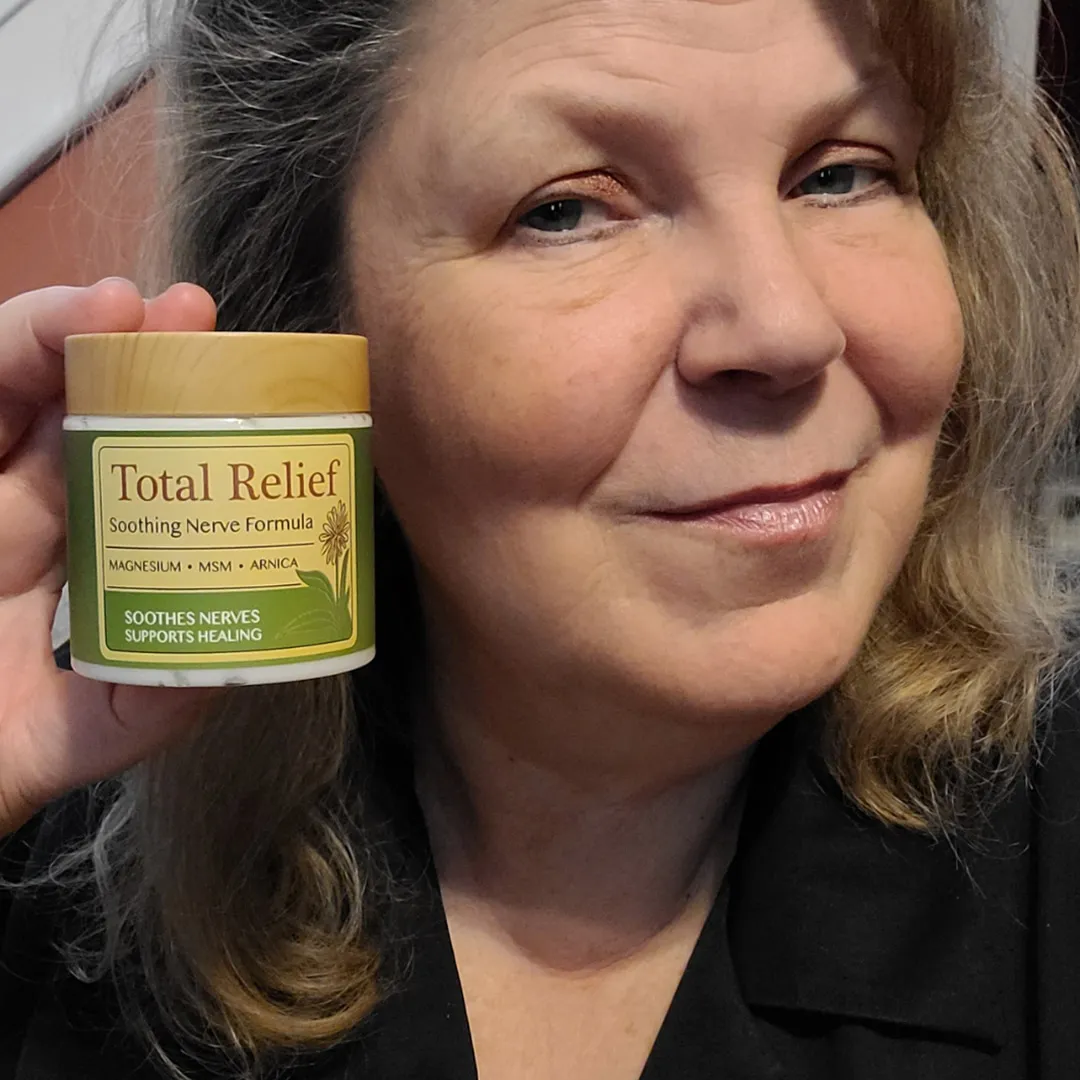
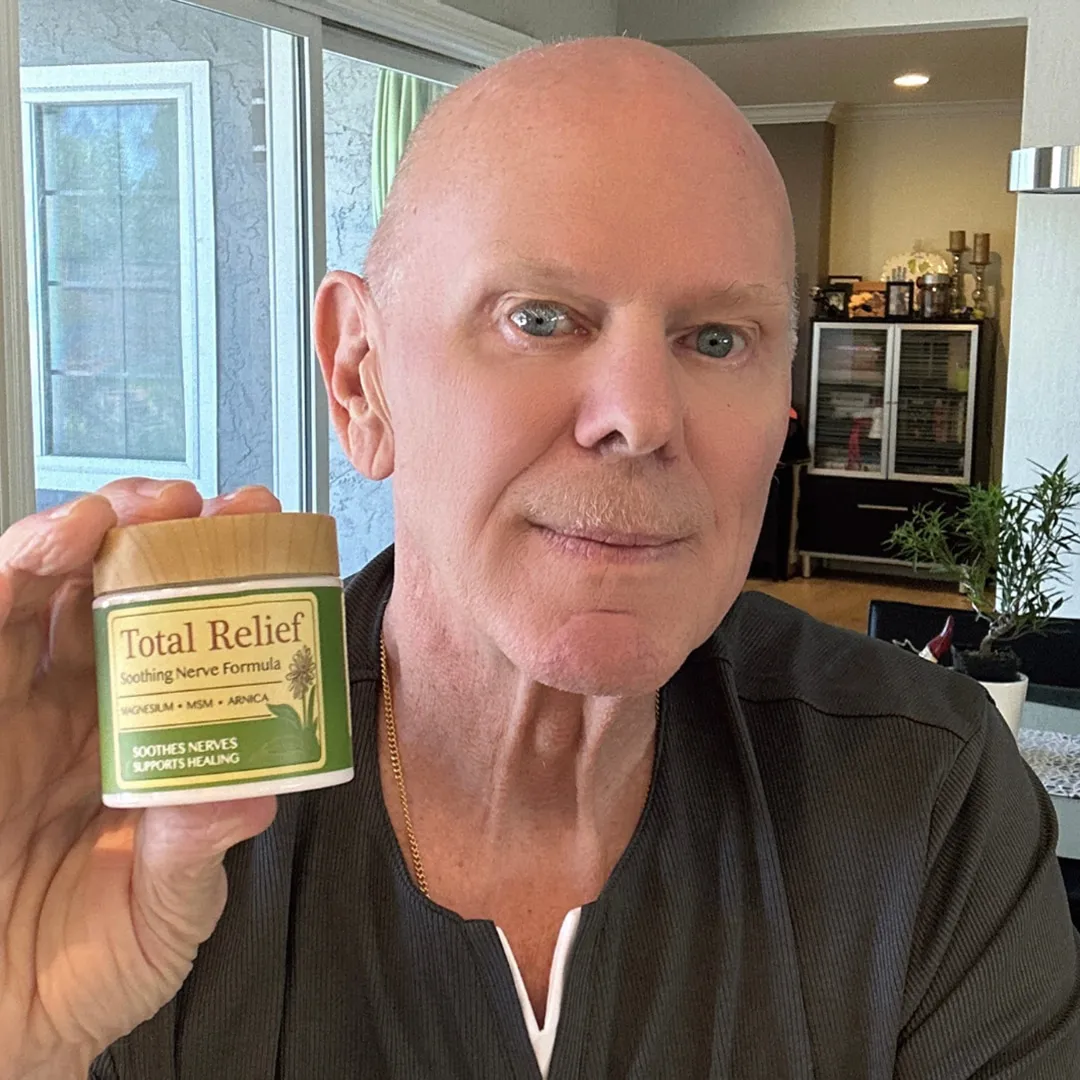
Darek’s results were hard to argue with:
"At first, I was a bit skeptical about the Total
Relief cream as there are many different types of
creams and other products being advertised with claims
that they provide relief to nerve pain.
After the first time
when I applied Total Relief cream, I noticed soothing
on my nerves and it continued as I used Total Relief
once a day, as recommended.
After about a week, my discomfort due to tingling
and nerve discomfort subsided and this is the case
today, the 3rd week of using Total Relief cream.
My wife also applied this cream on her ankle and
knees. She said that it helped her to reduce pain and
discomfort.
And then there's Kathryn, and honestly her review is the one I
keep thinking about:
“I have been with unbearable foot pain for years.
They're extremely red and so hot like walking on hot
coals. I have taken multiple pain meds, used every
cream and lotion there is and even ice.
I'm 77 years old and felt like giving up until I saw
an ad for Total Relief. Something told me to try one
more remedy. I couldn't believe what happened as soon
as I applied the cream. It was more than a miracle.
The pain was gone and the fire out. I actually cried
and just couldn't believe how good I felt. God Bless,
the people who developed this cream. Please keep
making this so I may purchase more.
Now I can sleep!”
More Than 90,000 People Have Already Tried This

When I first came across Total Relief, I did what I always do
with anything health-related. I went straight to the reviews.
Not the social media clickbait hype - the verified
ones.
What I found sounded like my Facebook groups.
People writing about the first night they slept through
without waking up.
Or about the moment they realized they hadn't thought
about their feet in a few hours, and how strange and
wonderful that felt after years of thinking about almost
nothing else.
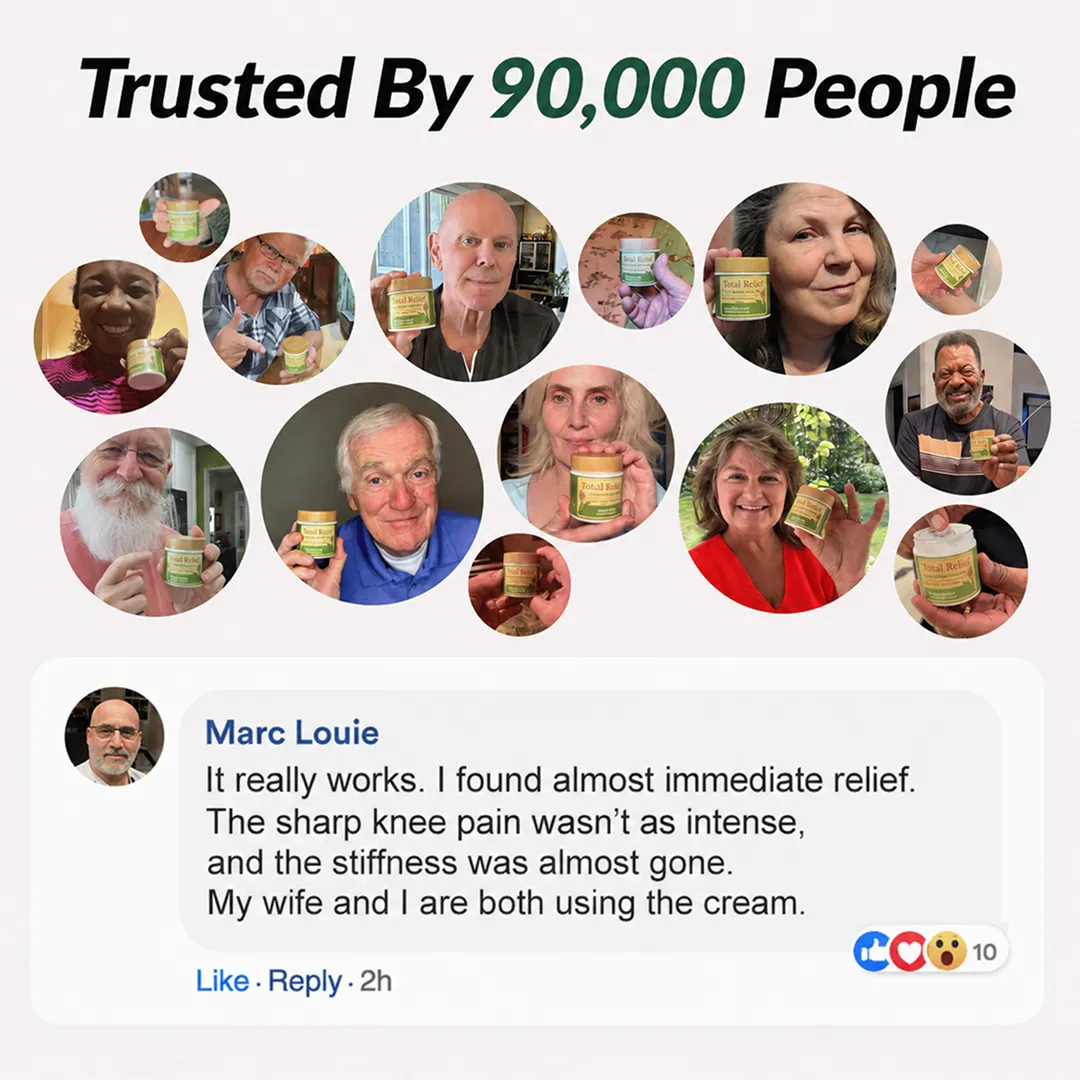
Over 90,000 customers. More than a million jars
sold.
That's a lot of people who were exactly where you are
right now, who decided to find out if this was different,
and found out that it was.
What Life Could Actually Look Like

I think about where I was before I found this.
I was planning every errand around how far I'd have to walk,
and skipping things I wanted to do because I didn't trust my
feet.
I was lying awake at night doing that thing where you
desperately try to find a position that hurts less, but
there isn't one.
And then I think about what changed.
Sleeping through the night. Making it through the grocery
store without needing to sit down halfway through. Walking
to the mailbox without thinking about it at all.
Getting on the floor with my grandkids instead of
watching from across the room.
It sounds small, maybe, if you've never lost those things.
But if you have, you know exactly what getting them back
means.
One Important Thing About Where to Buy

Total Relief is only sold through HiRelief's website. There
are no retail stores, no third-party sellers, and no Amazon
listings.
This isn't just a business decision, though. Here’s the real
reason.
The
FDA has sent multiple warning letters
to major online marketplaces about supplements and creams
containing unlisted ingredients, undeclared prescription
drugs, and outright dangerous compounds.
A study
published in JAMA found that
over half the products they tested didn't actually
contain what the label said.
That's a big problem when you're applying something to
your skin every single day.
Total
Relief is made in a
GMP-certified facility and formulated in the US.
Every ingredient is listed on the label - no proprietary
blends or hiding behind vague ingredient names.
You know
exactly what you're putting on your body.
Formulating it properly costs real money, and the regular
price of a jar reflects that.
But the
whole point was to make this accessible to the people who
actually need it, so first-time buyers can get started for
as low as $29 a jar.

The most popular option is Buy 2, Get 1 Free - three jars
for $34.95 each, with free shipping.
That's 61% off, and it's the one most people land on.
But if you want the
best value, the Buy 3, Get 3 Free
package works out to
$29.95 per jar with free
shipping - 67% off the regular price. This is the one Dr.
Jacquemin recommends, and for good reason.
Why stock up? Because research shows nerves that have been
starving for a long time need consistent, sustained
magnesium to fully calm down.
That takes three to six months.
A lot of people who try just one jar and stop early end up
feeling like it "didn't work" - when they were actually
right on the edge of the breakthrough.
The 6-jar package also comes
with two free bonuses:
A guide to a 5-minute daily foot massage routine that helps
with circulation, and a meal plan built around foods that
support nerve health. Together they're valued at
$77, included at no extra
charge.
At $29.95 a jar with free shipping, that's under a dollar a
day - compared to $600+ nerve block injections that wear off
in weeks, $2,000+ IV magnesium sessions, and $300 pain
clinic visits that mostly end with another prescription.
It adds up fast on the other side.
You Really Don't Have to Decide Anything Today

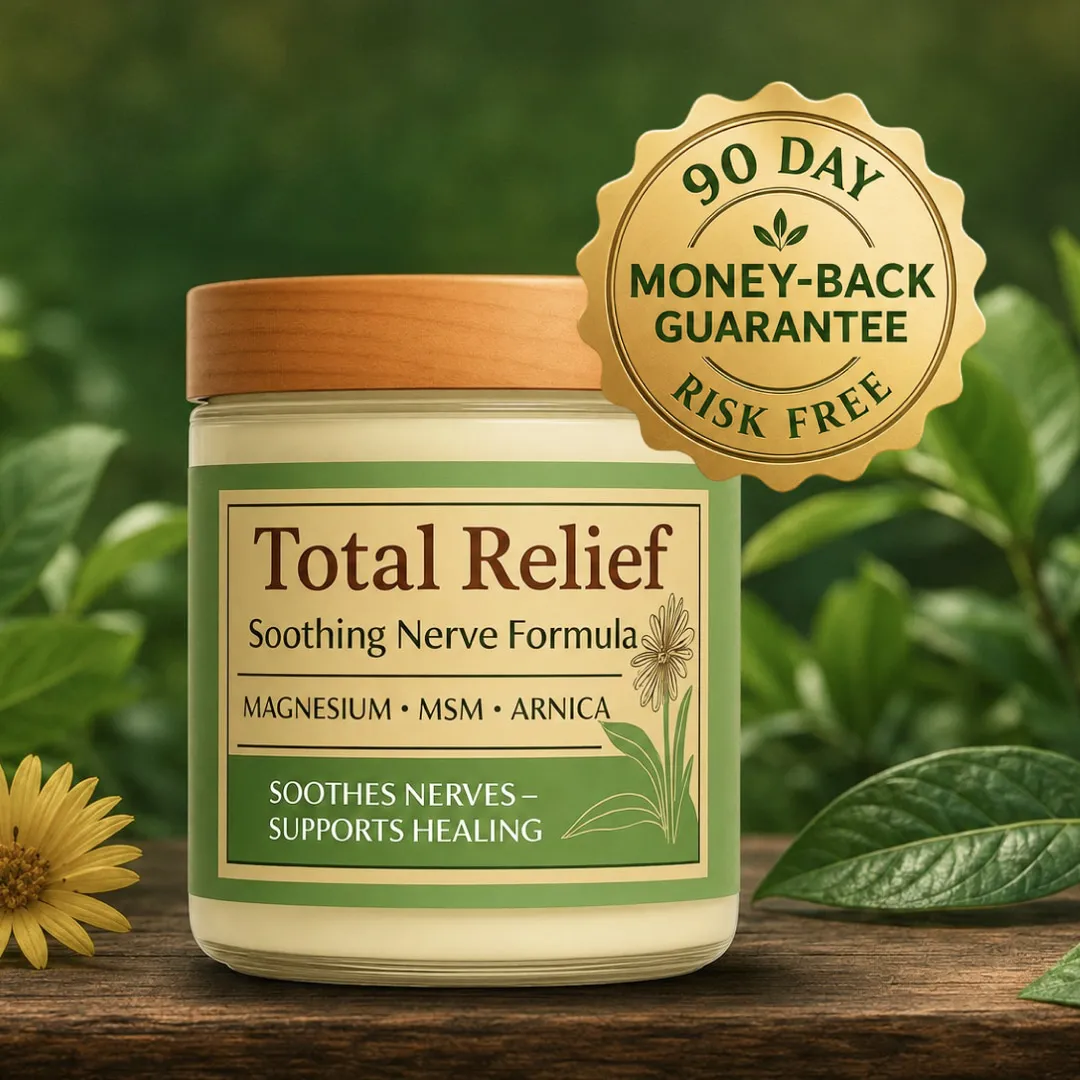
Every order comes with a 90-day money-back guarantee. If you
go through your supply and don't feel like it made a
difference, just contact the team and you'll get your money
back.
No interrogation, no runaround.
Think of the next 90 days as a test. You're not committing
to anything - you're just finding out whether your nerves
respond when they finally get what they've been missing.
The only risk worth thinking about is not taking action at
all. Total Relief has sold out three times - the last few
production batches were gone within days.
If the buttons on this page are still live, there's stock,
but that's not guaranteed to stay that way.
Two Different Roads From Here